Quick Answer
Just got a pool? Here’s the short version: learn how to test your water, runto get a full turnover per day, keep chlorine at 1-3 ppm and pH at 7.4-7.6, brush the walls weekly, and empty the skimmer basket regularly. That covers 90% of keeping it clean. This checklist walks you through everything else you should know in your first 30 days.
What You Need To Know
Week 1: Get the Basics Down
☐ Learn your equipment
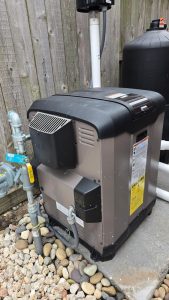
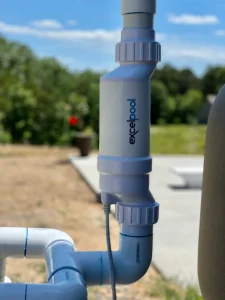
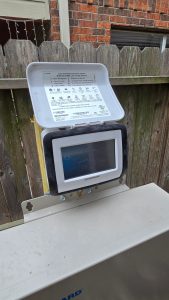
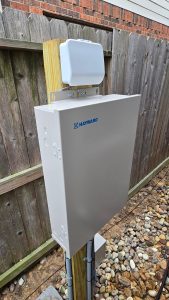
Walk out to your equipment pad and identify each piece. You should know where these are and what they look like. This is what my equipment pad looks like and what all the pieces are (most of them will look similar. Note that my pool is chlorine based so I don’t have a salt cell installed):
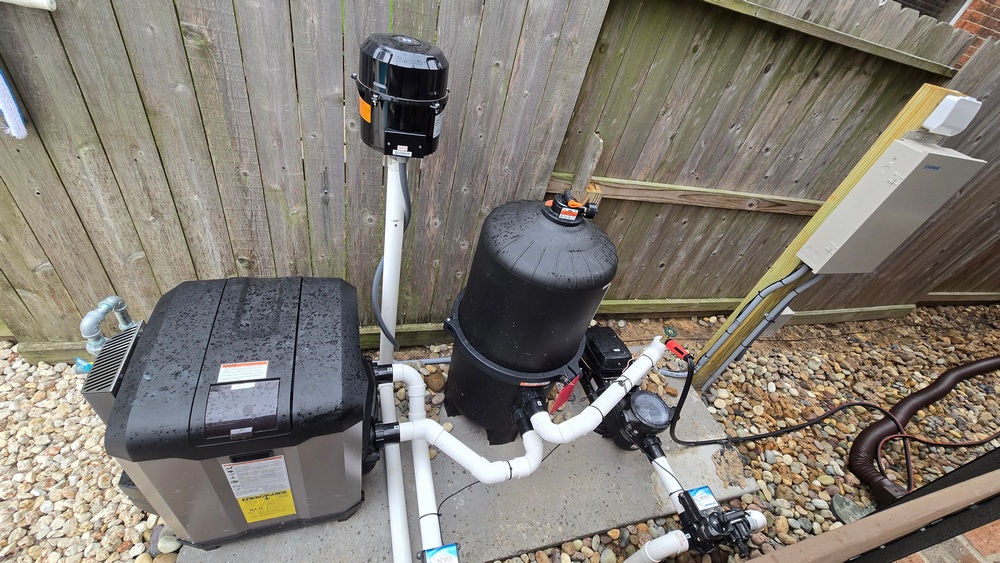
- Pump — the motor with the clear strainer basket lid
- Filter — the large tank (cartridge, sand, or DE)
- Heater (if you have one) – the chunky box with a gas line or fan unit
- Salt cell (if you have one) — a crooked tube plumbed into the return line
- Automation panel (if you have one) – the touchscreen or control box
- Circuit breaker for pool equipment – know where it is in case you need to shut everything off
☐ Read the manuals (or at least skim them)
Your builder or the previous homeowner should have left equipment manuals. At minimum, find the manual for your pump and automation system. If they’re missing, every major manufacturer has PDFs online – search the model number on the nameplate sticker. I try to make this guide pretty comprehensive but I don’t cover every piece of equipment by every manufacturer.
☐ Get a test kit
I recommend one of these two approaches:
- Taylor K-2006 – the gold standard drop-based test kit. Tests FC, CC, pH, TA, CH, and CYA. More accurate than strips. Costs about $50-$70
- Test strips – faster and easier, but less precise. Fine for routine checks if you get a good brand (AquaChek 7-way is solid). Costs about $15-$25 and gives you enough strips for years.
See our full How to Test Your Pool Water guide for step-by-step instructions on each method.
💲 Cost: A Taylor K-2006 test kit runs $50–$70 and lasts about a year of weekly testing. Replacement reagent packs are $30-$40. It’s the single best investment you’ll make as a pool owner.
☐ Test your water and record the numbers
Test your water and write down the results. These are the numbers you’re looking for:
| Parameter | Target | What to Add If Off |
|---|---|---|
| Free Chlorine | 1–3 ppm | Liquid chlorine (low) or wait/dilute (high) |
| pH | 7.4–7.6 | Muriatic acid (high) or soda ash (low) |
| Total Alkalinity | 80–120 ppm | Baking soda (low) or muriatic acid (high) |
| Cyanuric Acid (CYA) | 30–50 ppm | Stabilizer/conditioner (low) or dilute (high) |
| Calcium Hardness | 200–400 ppm | Calcium chloride (low) or dilute (high) |
Don’t panic if your numbers are way off. Adjustments are straightforward – our How to Balance Your Pool Water page walks through each one.
☐ Set your pump schedule
If you have an automation system, program the pump to run 8-12 hours per day. Variable-speed pump? Run it at lower speed for longer – it’s quieter and cheaper. See How Pool Systems Work for typical schedules.
One thing to consider in the noise. The single speed pumps are fairly loud and if it’s right by your bedroom window (or your neighbor’s) you will certainly hear it. To make it worse, the best time to run it is at nigh when the electricity is cheaper. Running a good variable speed pump on low speed is almost completely silent.
If you have a manual timer or single-speed pump, just set it to run during the day (when UV is destroying chlorine and people are swimming).
Week 2: Establish Your Routine
☐ Build a weekly habit
Pick one day a week (Saturday morning works for most people) and do these things:
- Test the water (FC, pH at minimum)
- Adjust chemicals if needed
- Empty skimmer basket and pump strainer basket
- Brush the walls, steps, and corners with a pool brush
- Skim the surface with a leaf net
- Check filter pressure gauge – clean the filter when it’s 8-10 PSI above your clean baseline
This takes about 20–30 minutes. That’s it. Our Weekly Pool Maintenance Routine has the full details.
☐ Stock your basic supplies
You don’t need the entire pool store shelving. Start with these essentials:
- Liquid chlorine (1-2 gallons) – for regular chlorine additions and shocking
- Muriatic acid (1 gallon) – for lowering pH and alkalinity
- Cyanuric acid / stabilizer (small bag) – if your CYA tested low
- Baking soda (from the grocery store) – for raising alkalinity. Identical to “alkalinity increaser” at the pool store but 1/5 the price
- Test kit and/or strips
- Telescoping pole + brush head + leaf skimmer attachment
Pro Tip: Buy liquid chlorine (10% sodium hypochlorite) from the pool store or big box store instead of chlorine tabs for your primary sanitization. Tabs will do the job as well and are easier to handle but they contain cyanuric acid that accumulates over time and eventually causes problems. Liquid chlorine goes in, does its job, and leaves nothing behind. See our Chlorine Guide for the full story.
Week 3-4: Level Up
☐ Learn what your filter needs
Find out what type of filter you have (cartridge, sand, or DE) and learn the maintenance procedure. Record your clean baseline filter pressure – you’ll need this number to know when it’s time to clean.
☐ Understand your sanitizer system
If you have a salt water pool, learn how to check the salt level and adjust the output on the salt cell controller. If you have a traditional chlorine pool, get comfortable with your weekly chlorine routine.
☐ Get to know your pool’s quirks
Every pool is different. After a month, you’ll start to notice patterns:
- How fast does your chlorine get used up? (Faster in hot, sunny weather)
- Which direction does your pH drift? (Most pools drift up)
- Where do leaves and debris collect? (Adjust return jets to push debris toward the skimmer)
- How often does the filter need cleaning? (More in fall when leaves drop)
☐ Consider a robotic pool cleaner
If you don’t have an automatic cleaner, a robotic pool cleaner is the single best quality-of-life upgrade. Drop it in, press a button, it vacuums the floor and walls for you. A solid one runs $300-$800 and will save you hours of manual vacuuming.
💲 Cost: First-month pool supply costs for a new owner: $150–$300 (test kit + basic chemicals + a telescoping pole with brush and skimmer). After that, ongoing monthly chemical costs average $30–$75 depending on pool size and sanitizer type. See our full cost breakdown.
Deep Dive
Don’t Rely on the Pool Store Test
Most pool stores offer free water testing – you bring in a sample, they run it through a machine, and hand you a printout with recommendations. This is a useful second opinion, but don’t treat it as gospel.
Why? The free test leads to a sales pitch. If your alkalinity is at 75 ppm (barely below the 80 ppm target), they’ll recommend you buy their $18 “alkalinity increaser” – which is just baking soda you can buy for $3 at the grocery store. Their recommendations are always “add more product” because that’s how they make money.
Learn to test your own water and make your own decisions. Use the pool store test as a calibration check a few times a year, not as your primary maintenance guide.
The Most Common New Owner Mistakes
1. Not running the pump long enough
The number one mistake. Your pump needs to circulate the full pool volume at least once per day. For most residential pools and single speed pumps, that’s 8-12 hours. Cutting pump time to save electricity leads to cloudy or green water.
2. Using only chlorine tablets
Tabs are convenient but they contain CYA (stabilizer). Over months, CYA accumulates beyond usable levels (100+ ppm), and at that point chlorine becomes much less effective. The only way to lower CYA is to drain and refill water. Use liquid chlorine as your primary sanitizer and save tabs for vacations or dispensers.
3. Adding chemicals without testing first
Always test, then adjust. The pool store will sell you a weekly “shock and maintain” routine that has you adding a fixed amount of chlorine every week regardless of what your water actually needs. Test first. Add only what’s needed.
4. Neglecting to brush
Algae loves undisturbed surfaces. The floor, walls, steps, corners, and behind ladders need to be brushed at least weekly. Brushing breaks up any biofilm before it becomes visible algae. Five minutes of brushing prevents hours of algae treatment and more money on chemicals.
5. Ignoring the filter
A dirty filter can’t clean your water. Check the pressure gauge weekly — when it reads 8-10 PSI above your clean baseline, it’s time to clean. A clogged filter is the most common hidden cause of water quality problems.
When to Call a Professional
Most pool maintenance is DIY-friendly. But call a pro if:
- Your pump won’t prime and you’ve checked the obvious stuff (see Pump Troubleshooting)
- You suspect a leak (water level dropping more than 1/4″ per day after accounting for evaporation)
- Your heater won’t ignite or smells like gas
- You need electrical work (pump motor replacement, adding new equipment)
- Your pool is swamp-green and you don’t want to spend a week on the recovery yourself
A one-time professional pool cleaning runs $150-$300. Monthly pool service (weekly visits) runs $100-$200/month. See our DIY vs Professional Pool Service comparison.
FAQ
How much time does pool maintenance take?
About 20-30 minutes per week for routine care (testing, skimming, emptying baskets, brushing). Add another 30-60 minutes every 4-8 weeks for filter cleaning. It’s less work than most people expect – the key is staying consistent so you never end up with a big problem.
Can I use regular household bleach instead of pool chlorine?
Technically yes – bleach is sodium hypochlorite, same as liquid pool chlorine. But pool chlorine is typically 10-12.5% concentration while household bleach is 6-8%. You’d need almost twice as much. Pool-grade liquid chlorine is cheap and the right concentration. Just use that.
What’s the most important number to watch?
Free chlorine. If your FC is in range (1-3 ppm), your water is sanitized and safe. pH is a close second because it affects how effective that chlorine is. Everything else (alkalinity, calcium, CYA) matters but changes slowly – weekly checks are fine for those.