
Quick Answer
Pool heaters extend your swimming season by months – or make year-round swimming possible. Gas heaters heat fast and work in any climate. Heat pumps cost more upfront but use 80% less energy. Solar heaters are cheapest to operate but slowest and weather-dependent. For most pool owners in warm climates, a gas heater is the go-to for quick heating, while heat pumps make more sense for consistent, all-season warming.
What You Need to Know
- Gas heaters heat fastest – they can raise your pool temperature 1–3°F per hour depending on pool size and BTU rating
- Heat pumps are most energy-efficient – they extract heat from the air rather than burning fuel, but they work slower and lose effectiveness below ~50°F air temperature
- Solar heaters are cheapest to run – essentially free after installation — but depend on sun exposure and heat slowly
- Pool size determines what you need – an undersized heater will run constantly and still struggle to reach temperature
- All heaters require the pool pump to be running – water must flow through the heater for it to operate safely
Types of Pool Heaters Compared
| Feature | Gas Heater | Heat Pump | Solar |
|---|---|---|---|
| Fuel source | Natural gas or propane | Electricity (compressor) | Solar energy (free) |
| Heating speed | Fast (1–3°F/hour) | Moderate (1–2°F/hour) | Slow (varies widely) |
| Works in cold weather? | Yes — any temperature | Limited below ~50°F air temp | Minimal in overcast/cold |
| Installation cost | $2,500–$5,000 | $3,500–$7,000 | $2,000–$5,000 |
| Monthly operating cost | $200–$600 (heavy use) | $50–$150 | $0–$10 (pump energy only) |
| Lifespan | 7–12 years | 10–15 years | 15–20 years |
| Maintenance | Annual inspection; scale removal | Keep coils clean; annual checkup | Minimal — check panels/plumbing |
| Best for | Quick heat, spas, occasional use, any climate | Consistent warming, mild-to-warm climates, frequent use | Sunny climates, budget-minded, eco-conscious |
Gas Heaters – Deep Dive
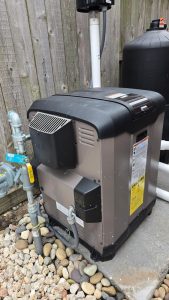
How They Work
Gas heaters burn natural gas or propane to heat a copper heat exchanger. Pool water flows through the exchanger and is heated directly before returning to the pool. It’s simple, effective, and the fastest way to heat a pool.
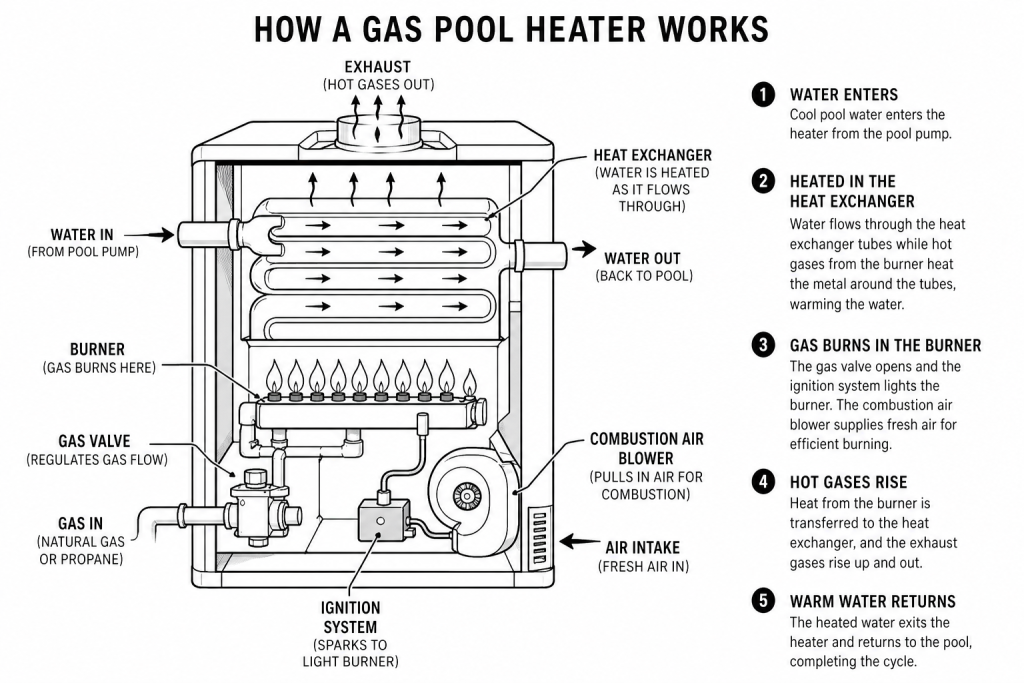
Sizing a Gas Heater
Gas heaters are rated in BTU (British Thermal Units) per hour. To estimate what you need:
Formula: BTU needed = Pool Volume (gallons) × 8.34 × Desired Temperature Rise ÷ Desired Hours to Heat
| Pool Size (gallons) | 200K BTU | 300K BTU | 400K BTU |
|---|---|---|---|
| 10,000 | ~3 hrs for 10°F rise | ~2 hrs for 10°F rise | ~1.5 hrs for 10°F rise |
| 15,000 | ~4.5 hrs for 10°F rise | ~3 hrs for 10°F rise | ~2.3 hrs for 10°F rise |
| 20,000 | ~6 hrs for 10°F rise | ~4 hrs for 10°F rise | ~3 hrs for 10°F rise |
| 30,000 | ~9 hrs for 10°F rise | ~6 hrs for 10°F rise | ~4.5 hrs for 10°F rise |
Gas Heater Pros and Cons
Pros:
- Fastest heating – great for “heat on demand” when you decide to swim
- Works in any weather, any air temperature
- Excellent for heating spas quickly (30–45 minutes from cold)
- Lower upfront cost than heat pumps
- Reliable, well-understood technology
Cons:
- Highest operating cost per hour of any heater type
- Requires gas line (natural gas or propane tank)
- Shorter lifespan than heat pumps (especially with hard water – scale damages the heat exchanger)
- Produces combustion byproducts (CO2, water vapor)
- Heat exchanger is vulnerable to corrosion from imbalanced water chemistry
Gas Heater Maintenance
| Task | Frequency | Details |
|---|---|---|
| Visual inspection | Monthly | Check for rust, corrosion, discoloration on cabinet |
| Check for soot | Annually | Black soot inside burner tray = incomplete combustion (call a tech) |
| Check ignition | Seasonally | Should light within 5–10 seconds of firing |
| Inspect heat exchanger | Annually (professional) | Scale buildup reduces efficiency and can crack exchanger |
| Inspect gas connections | Annually | Smell test for leaks; check flex connector for damage |
| Clear around heater | Ongoing | Maintain 3 ft clearance on all sides for airflow and safety |
| Check for insect nests | Seasonally | Spiders and wasps nest in gas orifices and burner trays — clear before firing up |
Heat Pumps — Deep Dive
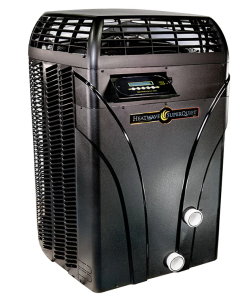
How They Work
A heat pump doesn’t generate heat – it moves it. It works like an air conditioner in reverse: a fan draws in outside air, a compressor extracts the heat from that air, and a heat exchanger transfers it to your pool water. For every unit of electricity consumed, a heat pump can produce 5–6 units of heat, making it extraordinarily efficient.
COP (Coefficient of Performance)
Heat pump efficiency is measured by COP – the ratio of heat output to electricity input:
| Air Temperature | Typical COP | Meaning |
|---|---|---|
| 80°F+ | 6.0–7.0 | Producing 6–7x more heat than electricity consumed |
| 70°F | 5.0–6.0 | Still very efficient |
| 60°F | 3.5–4.5 | Efficiency dropping but still good |
| 50°F | 2.0–3.0 | Marginal efficiency |
| Below 50°F | <2.0 | Most units shut off; not practical |
Sizing a Heat Pump
Heat pumps are rated in BTU like gas heaters. Because they heat more slowly, many pool owners size up:
- Up to 15,000 gallons: 100,000–120,000 BTU heat pump
- 15,000–25,000 gallons: 120,000–140,000 BTU
- 25,000–40,000 gallons: 140,000+ BTU
Heat Pump Pros and Cons
Pros:
- 5–6x more energy efficient than gas heaters
- Much lower monthly operating cost ($50–$150 vs. $200–$600)
- Longer lifespan (10–15 years)
- No combustion – no gas lines, no exhaust
- Excellent for maintaining a consistent temperature over long periods
Cons:
- Higher upfront cost ($3,500–$7,000 installed)
- Heats more slowly than gas
- Loses effectiveness below ~50°F air temperature
- Requires significant airflow – larger footprint on equipment pad
- Not great for quick spa heating
- Requires 50-60 amp electrical circuit (may need panel upgrade)
Heat Pump Maintenance
| Task | Frequency | Details |
|---|---|---|
| Clean evaporator coils | Quarterly | Hose off leaves, pollen, and debris from the coil fins |
| Check airflow | Monthly | Keep 3+ ft clearance around unit; no bushes or fencing blocking airflow |
| Inspect for refrigerant leaks | Annually (professional) | Loss of refrigerant = loss of heating ability |
| Clean water heat exchanger | Annually | Scale buildup from hard water; professional descaling recommended |
| Check defrost cycle | Seasonally | In cooler weather, the defrost cycle should activate normally |
Solar Pool Heaters – Deep Dive
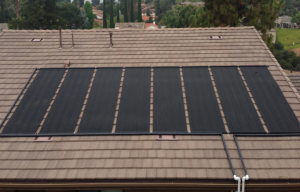
How They Work
Pool water is pumped through solar collector panels (usually installed on a roof). The sun heats the water as it flows through the panels, and it returns to the pool warmer. No electricity is used for heating – only for the pump that circulates the water.
Solar Sizing Rule of Thumb
You need solar collector area equal to 50–100% of your pool’s surface area:
- Warm climates (Sun Belt): 50–70% of pool surface area
- Moderate climates: 70–100% of pool surface area
- Northern climates: 100%+ of pool surface area
For a pool with 350 sq ft of surface area in a warm climate, you’d need approximately 175–245 sq ft of solar collector panels.
Solar Heater Pros and Cons
Pros:
- Cheapest to operate – essentially free heat
- Longest lifespan (15–20 years for unglazed panels)
- Environmentally friendly
- No gas lines, no electrical upgrades
- Very low maintenance
Cons:
- Weather dependent – cloudy days and nighttime provide no heat
- Slowest heating method
- Requires significant roof space with good sun exposure
- Roof installation adds complexity and potential roof penetrations
- Not effective for spas (can’t heat to 100°F+ reliably)
- Performance drops significantly in fall/winter even in warm climates
Which Heater Type Is Right for You?
Use this decision guide:
| If you… | Best choice |
|---|---|
| Want to swim on a whim and heat fast | Gas heater |
| Have a spa and want it hot in 30 minutes | Gas heater |
| Want to keep pool heated consistently all season | Heat pump |
| Live in a warm climate and swim frequently | Heat pump (or gas + heat pump combo) |
| Live in a sunny area and want lowest operating costs | Solar |
| Have a large pool and limited budget for monthly costs | Heat pump |
| Live where winter temps drop below 50°F | Gas heater (or dual: heat pump + gas backup) |
| Want the best of both worlds | Gas + heat pump combination (heat pump maintains temp, gas for quick boost and spa) |
Pool Covers: The Hidden Heater
Regardless of which heater type you choose, a pool cover is the single most impactful thing you can do to retain heat:
- Pools lose 70–80% of their heat through evaporation
- A solar cover (bubble cover) can reduce heat loss by 50–70%
- A liquid solar cover (Solar Fish, etc.) provides 15–30% reduction with zero hassle
- Covering your pool at night can cut heating costs in half
Think of it this way: the best heater in the world doesn’t matter if you’re losing all the heat overnight. A $100 solar cover paired with any heater is more effective than a premium heater with no cover.
• Heat pump: $5,000 install + $400–$900/year electricity = $7,000–$9,500 total
• Solar: $3,500 install + ~$0/year = $3,500 totalHeat pumps typically break even with gas heaters within 2–3 years. Solar breaks even with heat pumps within 3–4 years. See our equipment cost guide for detailed breakdowns.
Troubleshooting Common Heater Problems
| Problem | Gas Heater | Heat Pump |
|---|---|---|
| Won’t turn on | Check gas supply; check pilot/igniter; check water flow (pump must be running) | Check power breaker; check water flow; air temp may be too low |
| Fires then shuts off | Low water flow (dirty filter); high limit tripped; pressure switch fault | Low refrigerant; blocked airflow; dirty coils |
| Heats too slowly | Scale in heat exchanger; dirty burners; undersized unit; no pool cover | Low air temperature; dirty coils; undersized unit; no pool cover |
| Strange noises | Rumbling = scale buildup; whistling = gas pressure issue | Buzzing compressor is normal; grinding = fan motor issue |
| Leaking water | Cracked heat exchanger; condensation (normal in cool weather) | Normal condensation; cracked heat exchanger if excessive |
| Error codes | Check manual for specific codes; “LO” usually = low flow | Check manual; most codes relate to temp sensors or flow |
Frequently Asked Questions
How warm should I keep my pool?
Most people prefer 82–86°F for comfortable swimming. Spas typically run at 100–104°F (104°F is the generally recommended maximum). Each degree warmer costs approximately 10–15% more in energy.
Can I add a heater to an existing pool?
Yes. Gas heaters and heat pumps are installed at the equipment pad and plumbed into the existing return line – typically a straightforward addition. Solar requires roof or rack installation. Budget for gas line extension (gas heater) or electrical panel upgrade (heat pump) if needed.
Do I need to run the heater all the time?
No. Most pool owners heat on-demand or use a thermostat to maintain a set temperature during swimming season. With a pool cover, you can heat to your target, cover the pool, and the temperature will hold for 1–2 days with minimal loss.
What’s the cheapest way to heat my pool?
Step 1: Buy a solar/bubble cover ($50–$150). Step 2: If you want active heating, a heat pump is cheapest to operate long-term. Solar is cheapest overall if you have sunny conditions and roof space.
How long does a gas heater last?
Typically 7–12 years. The heat exchanger is usually the first thing to fail, especially in areas with hard water (scale buildup). Annual professional inspection and keeping water chemistry balanced extends the life significantly.
Related Pages
- Pool Pumps Guide – Your pump must be running for any heater to operate
- Salt Chlorine Generators – Often paired with heaters in the plumbing line
- pH, Alkalinity, and Calcium – Balanced water chemistry protects your heater’s heat exchange
- Equipment Costs and Lifespan – Full cost comparison of heating options
- Energy Saving Tips – Strategies to reduce heating costs